


In Greek mythology, Sisyphus was condemned to push a boulder up a hill for eternity, only to watch it roll back down every time he neared the top.
Food is Medicine (FIM) advocates know the feeling.
That was the comparison Dr. Dariush Mozaffarian, Director of Tufts’ Food is Medicine Institute, drew at FIMCON 2026, the inaugural meeting hosted by the Food is Medicine Coalition in Washington, D.C. For years, advocates have carried a simple but overlooked truth: Food can support longevity and help prevent, manage, and even potentially reverse chronic disease.


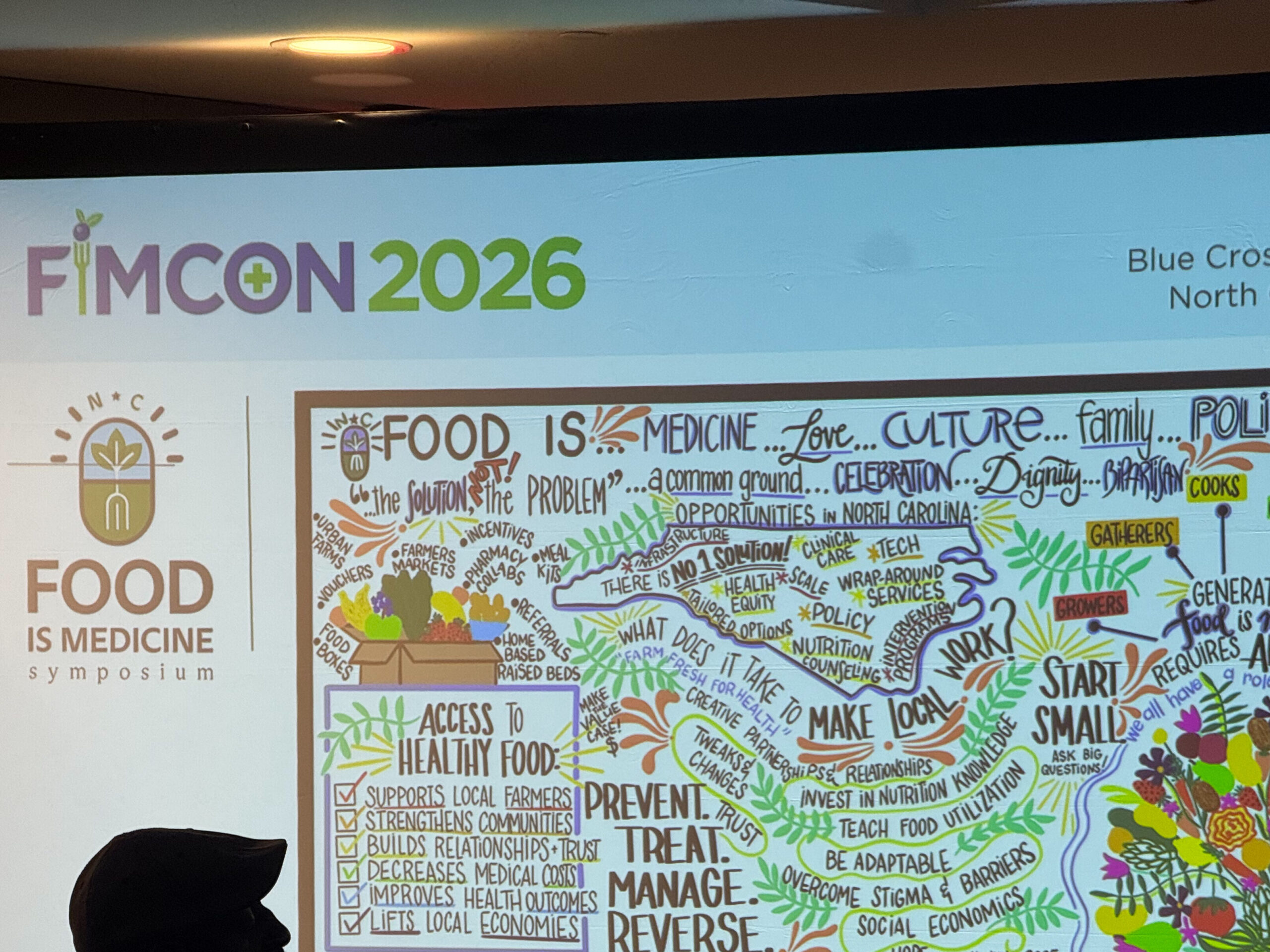
Yet the field has often been forced uphill, pushing against systems built to value procedures over prevention. Pilots show results. Evidence grows. Patient stories inspire people. Then funding ends, reimbursement lanes narrow, or programs remain bolted onto care instead of built into it.
At FIMCON, Dr. Mozaffarian proposed a different ending. After decades of Sisyphean work, the boulder may finally be cresting the hill for good — largely driven by new data:
- Poor diet and food insecurity cost the United States an estimated $1.1 trillion each year in healthcare spending and lost productivity.
- Diet-related chronic diseases are linked to roughly 500,000 deaths in the U.S. annually.
- A recent study saw 49% fewer hospital admissions and 72% fewer skilled nursing facility admissions when comparing medically tailored meal recipients with nonrecipients over roughly two years.
- North Carolina’s Healthy Opportunities Pilot, a Medicaid program, saw an $85 per-beneficiary, per-month lower spending trend.
The research shows that there is real opportunity here, but when proof points don’t reach decision-makers, even bipartisan movements can stall.
Food is Medicine needs language that can travel from a patient panel to a congressional office, from a community-based organization to a health plan, or from a clinical workflow meeting to a state Medicaid budget conversation.
Here are five considerations that stand out when communicating the importance of Food is Medicine:
1. GLP-1s may inadvertently stall the movement
GLP-1s are everywhere right now. They are highly visible and increasingly treated as shorthand for the future of metabolic health.
But even strong proponents, including our clients at the National Obesity Medicine Association, would say these treatments aren’t the whole story. GLP-1s can be transformative, but they are just one part of a broader obesity care model that must also include nutrition therapy, physical therapy and behavior modification.
Dr. Mozaffarian offered one of the sharpest lines of the conference: “You’re not buying long-term health. You’re renting weight loss.”
GLP-1s can be powerful tools. They can create a window for change and are significantly improving lives, particularly for people living with diabetes.
But they don’t build food skills, reshape food environments, or teach people how to shop, cook, eat and sustain health after the prescription stops.
Food is Medicine has an important opening here. The case shouldn’t be about medication versus food, but how the two can work together to create lasting positive health outcomes.
2. One-size-fits-all messaging won’t work
Food is Medicine doesn’t need a louder megaphone as much as it needs a sharper translation strategy.
A policymaker will value new research showing that medically tailored meals reduce hospitalizations and emergency department visits, with healthcare savings offsetting 98% of meal costs. It gives them the language they need: savings, utilization and return on investment.
But data is only one language, and each decision-maker requires a different translation. Clinicians value workflow integration. Payers need measurement. Patients need to see themselves in the solution.
The patient testimonials at FIMCON made this especially clear. Donna Lawsonam, a Food & Friends client and advocate, recounted crying at her door because her first delivery included oranges, which she hadn’t eaten in a year. James Rota, a participant in Living Hungry’s Produce Prescription Program, described going from 385 pounds, pre-diabetic, hypertensive, with high cholesterol, to no longer pre-diabetic, at a healthy weight, and cancer-free.
These stories do what a spreadsheet can’t. They show what the cost case is actually buying: lives changed for the better.
3. Trust has to be protected before scale arrives
Dr. Mehmet Oz, administrator for the Centers for Medicare & Medicaid Services (CMS), gave the field a warning as Food is Medicine gains traction at the national level. If programs become associated with fraud, abuse, or loose standards, political support could collapse quickly.
That warning matters because the field is entering a new phase. While scrappy pilots can run on trust, permanent infrastructure needs standards.
The Food is Medicine Coalition’s accreditation program for medically tailored meals is an important step. It gives the field a way to define what “good” looks like, including registered dietitian-designed meals, condition-appropriate nutrition, counseling and standards of care.
The communications challenge is to make that trust architecture easy to understand. Payers, regulators and Congress need a clear confidence statement they can repeat. That is the bridge from promising service to reimbursable care.

4. The commercial payer bridge
Most of the strongest cost evidence still comes from public payers. State waivers, Medicaid pilots and Medicare models have given the field some of its clearest proof points, including Tufts modeling that projects $3.4 billion in first-year Medicare savings from medically tailored meals.
But commercial plans insure roughly half the country, and they operate under different pressures.
They need a case built for shorter enrollment windows, employer expectations, retention, member experience and measurable near-term value. A Medicaid savings story won’t automatically become a commercial payer story.
But while that gap is actuarial, it’s also narrative.
5. This is bigger than healthcare
Food is Medicine naturally speaks the language of healthcare. That makes sense. The field is fighting for clinical integration, reimbursement and standards of care.
But one of the most compelling conversations at FIMCON widened the frame.
Values-aligned purchasing asks what happens when Food is Medicine dollars do more than feed patients. What if those dollars also support local farmers, culturally meaningful crops, ecological health, fair labor and regional resilience?
Dr. Steven Chen of Alameda County’s Recipe4Health described the multiplier effect of Food is Medicine as three H’s plus E: human health, economic health, ecological health and equity.
That framing does a lot of work. It tells people this isn’t just a healthcare intervention; it’s also an agriculture story, a rural development story, a climate resilience story, a workforce story and a dignity story. It gives more people a reason to care, while making the movement harder to ignore.
From movement to systems change
It’s exciting that Food is Medicine is gaining national attention right now. It has federal engagement, philanthropic investment, state experimentation, emerging standards, bipartisan curiosity and patient stories that cut through the noise.
The next 18 to 24 months will determine whether today’s attention becomes tomorrow’s infrastructure. In that time, the movement needs to welcome medication without being eclipsed by it, explain standards without sounding bureaucratic, and show savings without reducing people to savings. Most importantly, it will need to make the case in language that different audiences can actually use.
For Food is Medicine, the boulder may very well be at the top of the hill. The field now gets to decide what to say before it starts rolling on its own.

Christine Diven, MS, RD(N)
Senior Vice President of Life Sciences and Nutrition
CURA Strategies